Minor Chieftains - Nukwai Western Protectorate
Minor Chieftains: Nukwai Western Protectorate
The Nukwai Western Protectorate is not a kingdom in any conventional sense. It is a mutual acknowledgment, a broad agreement among the settlements of Funta's desert and scrubland interior that the alternative to cooperation is worse than cooperation. Chieftain Amina does not rule these towns so much as she represents the arrangement that allows them to exist without being consumed by the landscape or each other. The minor chieftains who govern them answer to her in the way that the practical always answer to the powerful: selectively, respectfully, and with one eye on the road out. Lahale sits at the protectorate's heart and operates as though it belongs to no one. This is, everyone has agreed, the correct arrangement.
Chieftain Akiki: Douhi
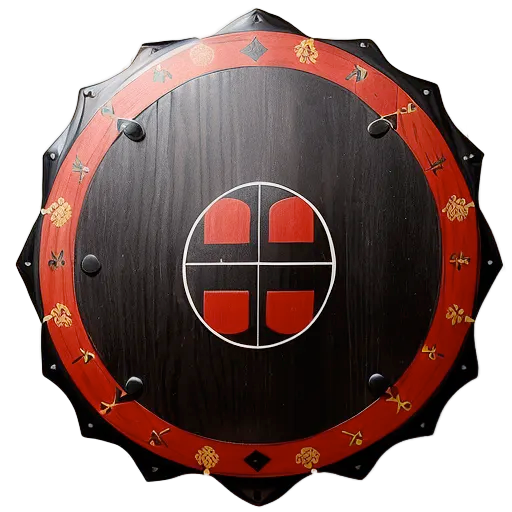
Chieftain Akiki | Douhi: Volta River corridor, between Lahale and Nukwai
Douhi sits on the Volta River equidistant between Lahale and Nukwai, and it feeds both of them. This is not an accident of geography; it is the foundation of the town's political existence. The livestock and crop yields of Douhi are not supplementary to the regional food supply; they are foundational to it, which means the town that produces them enjoys a degree of protection that its own walls do not fully explain. Chieftain Akiki, a Smaling who carries the resourcefulness her people are known for in concentrated form, understands this leverage precisely and manages it with the quiet skill of someone who has never needed to announce what everyone already knows.
She has built Douhi into a genuine community rather than a supply depot with ambitions. Security is taken seriously. Infrastructure receives consistent attention. The farms operate with an efficiency that reflects generations of accumulated practical knowledge rather than chieftain decree. The raiders who occasionally test the area's edges have discovered that a town strategically necessary to both Lahale and Nukwai attracts attention from both directions when threatened, and that Akiki has been known to ensure both neighbors are aware when the testing begins. She does not ask for protection. She arranges conditions in which protection becomes obvious.
Chieftain Tendai Chijioke: Dargol

Chieftain Tendai Chijioke | Dargol: western coast, primary gateway to the Junaloia islands
The honest account of Dargol is that the town functions primarily because the people running its actual operations are more capable than the person nominally in charge of it. Chieftain Tendai Chijioke holds his position with an unambition that his subordinates have learned to work around with the efficiency of long practice. He governs in the technical sense; he signs what is placed before him, attends what he is required to attend, and displays the approximate appearance of authority that the arrangement demands. The real power in Dargol belongs to his wife, Nia, whose competence in managing the town's interests has become so thoroughly understood that decisions of any consequence are simply routed to her as a matter of operational habit.
This has produced, counterintuitively, a stable and functional port. Nia's interest is in outcomes rather than credit, and the businesses that form Dargol's commercial spine (Rhodian Fishery, run by the Dwarf Gavric; Junaloia Imports, managed by the Zerren Lysandra; and Dargol Livestock, overseen by the Gnome Thalia) operate under her practical guidance without requiring her formal title. The port endures. Ships from the Junaloia islands find it navigable, if not distinguished. Nia considers it a work in progress. Tendai, as best anyone can determine, considers it fine.
Warlords Mosi, Zola, Jelani, and Nia: Melfi

Warlord Council: Mosi, Zola, Jelani, and Nia | Melfi: Southern Tellery Pan, desert interior
Melfi is not governed. It is balanced, a fragile equilibrium maintained among four warlord-led tribes whose only shared interest is the continued existence of the arrangement that gives each of them access to one of the town's four scarce wells. The Scorching Serpents answer to Mosi. The Desert Hawks answer to Zola, the order's sole female warlord and its most careful strategist. The Sand Vipers answer to Jelani. The Wasteland Wolves answer to Nia. Each controls their well with the seriousness of people who understand with precision what water means in the Southern Tellery Pan, where it means the difference between existing and not.
The non-affiliated residents of Melfi, those who belong to none of the four tribes and therefore none of the four wells, survive through services: informants, lookouts, healers, craftspeople who can fix what raiders break and ask no questions about how it was broken. Trade arrives only from heavily-armed caravans out of Manda, which prices the arrangement accordingly and knows it. The town's raiders range outward to the villages near the Lahale oasis and retreat behind Melfi's rough geography when serious attention arrives. Nobody has yet found it worth the cost to dismantle the place entirely. The four warlords have different opinions about whether that calculation will eventually change. Zola has opinions about what Melfi could become if it changed first, by its own initiative. She has not shared them widely.
Nukwai's claim over Melfi is nominal at best and has never been tested against the warlords' combined resistance. Chieftain Amina acknowledges this. So do the warlords. The arrangement persists on these terms.
Chieftain Kwame: Manda

Chieftain Kwame | Manda: Gulf of Duala, western coast
Manda is small. It is also indispensable, and Chieftain Kwame, a savvy human whose understanding of his town's leverage is exact, manages the resulting dynamic with a patience that those who mistake it for passivity tend to find instructive. The town sits on the Gulf of Duala and serves as the primary supplier to Melfi, which means it supplies an outlaw haven with the goods it needs to continue being an outlaw haven. This is a relationship Kwame maintains with the care of someone who understands that the peace between his town and the warlords is entirely commercial, and that commerce requires continuous cultivation.
The businesses that sustain Manda reflect a community that has thought carefully about what it requires and built exactly that: a fishery, a healing herb operation, a trading post, a ship repair yard, and a mercenary outfit that maintains the kind of reputation that discourages questions about the client list. The communal well is the social center; the harbor is the economic center. Kwame's influence exceeds Manda's size by a margin he has never advertised and has never needed to. The town occupies a political space that most chieftains would find uncomfortable: maintaining peace with Melfi while nominally answering to Nukwai, conducting commerce with all parties, and being trusted by none of them enough to become a target. Kwame has decided this is a form of success.
Chieftain Kwame Nia: Irbi

Chieftain Kwame Nia | Irbi: arid scrubland interior, nomadic service hub
Irbi is not a town in the conventional sense. It is a service: a transient oasis in arid scrubland, built around reliable wells, existing specifically to serve the nomadic hunters and gatherers who move through the region and need a place that will still be there when they return. The population shifts constantly. The buildings are designed for the temporary. The community is whatever configuration of people currently requires its services, which means Irbi is always full and never the same twice.
Chieftain Kwame Nia (a human male, retired adventurer, and holder of a past he keeps to himself in the way that people who have seen enough tend to) holds Irbi together through the specific authority of someone who has survived more than most and carries the evidence quietly. He manages Nia's Water Reserve himself, which is not vanity but practicality: the wells are the reason everything else exists, and he is not inclined to delegate their oversight to anyone whose judgment he has not personally evaluated over time. Nomad's Rest, run by the Human Elara, provides accommodation that asks no questions about previous stops. Season's Bounty, overseen by the Gnome Faelar, handles food with the pragmatism a transit community requires. The peace Kwame maintains is fragile by the nature of the place. It holds because he has decided it will, and he has enough history to back the decision.
Sister Sunfire: Djado
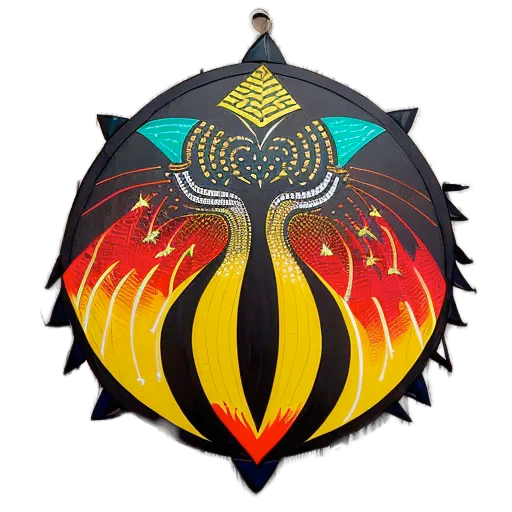
Sister Elara Sunfire | Djado: desert valley, adjacent to the Flamehold
Djado would be an unremarkable desert valley settlement if it were not the home of the Fire Swingers. The Flamehold is carved into the cliffs above it, and the town's existence, character, relative safety, and the particular deference with which passing raiders treat it are all downstream of that proximity. The Fire Swingers do not administer Djado. They simply live above it, and the effect on the town's security has been comprehensive.
Leadership falls to Sister Elara Sunfire, an elderly female Elf who carries both her age and her position with the specific ease of someone who has outlived the need to perform authority. Her precise relationship to the Flamehold is something she has never clarified and that nobody in Djado has pressed her on. What they know is that she manages the blend of nomadic hunters who pass through and the stable permanent population with a pragmatism perfectly suited to a desert community that has no margin for administrative theater. Sunfire Wells, Desert Bounty, and Valley Livestock are the three commercial pillars, austere by design, because the desert demands austerity. What Djado lacks in amenity it returns in safety, which for most of the people who choose to stop here is sufficient reason to return.
Chieftain Ealdred Stonegrip: Zouar

Chieftain Ealdred Stonegrip | Zouar: Bay of Mahajamba, desert coast
Zouar sits on the Bay of Mahajamba, which provides what the desert surrounding it cannot: fish, trade routes to nearby islands, and the specific breathing room that maritime access makes possible for towns that would otherwise be landlocked in terrain that punishes dependence on a single resource. Chieftain Ealdred Stonegrip, a Sand Elf whose pragmatism is the unsentimental variety earned in difficult environments rather than performed for effect, has turned this advantage into a functioning community that the desert's harshness has not overcome, which is a more significant achievement than the town's modest profile suggests.
Mahajamba Fisheries, run by the Half-Orc Torvald, handles the primary maritime harvest with the discipline the Gulf requires. Island Bounty Co., managed by the Human Elara, maintains the island trading relationships that give Zouar access to goods it cannot produce in place. Baobab Delights, overseen by the Gnome Faelar, processes and markets the local fruit that constitutes Zouar's small commercial distinction, a product recognized across a wider trade radius than the town's size would predict. Ealdred leads with the pragmatism the environment demands and the economy confirms. He has no illusions about what Zouar is and no ambitions to make it something the desert would not support. Zouar endures because its chieftain has never allowed himself the luxury of pretending otherwise.