Sir Mordin's Port
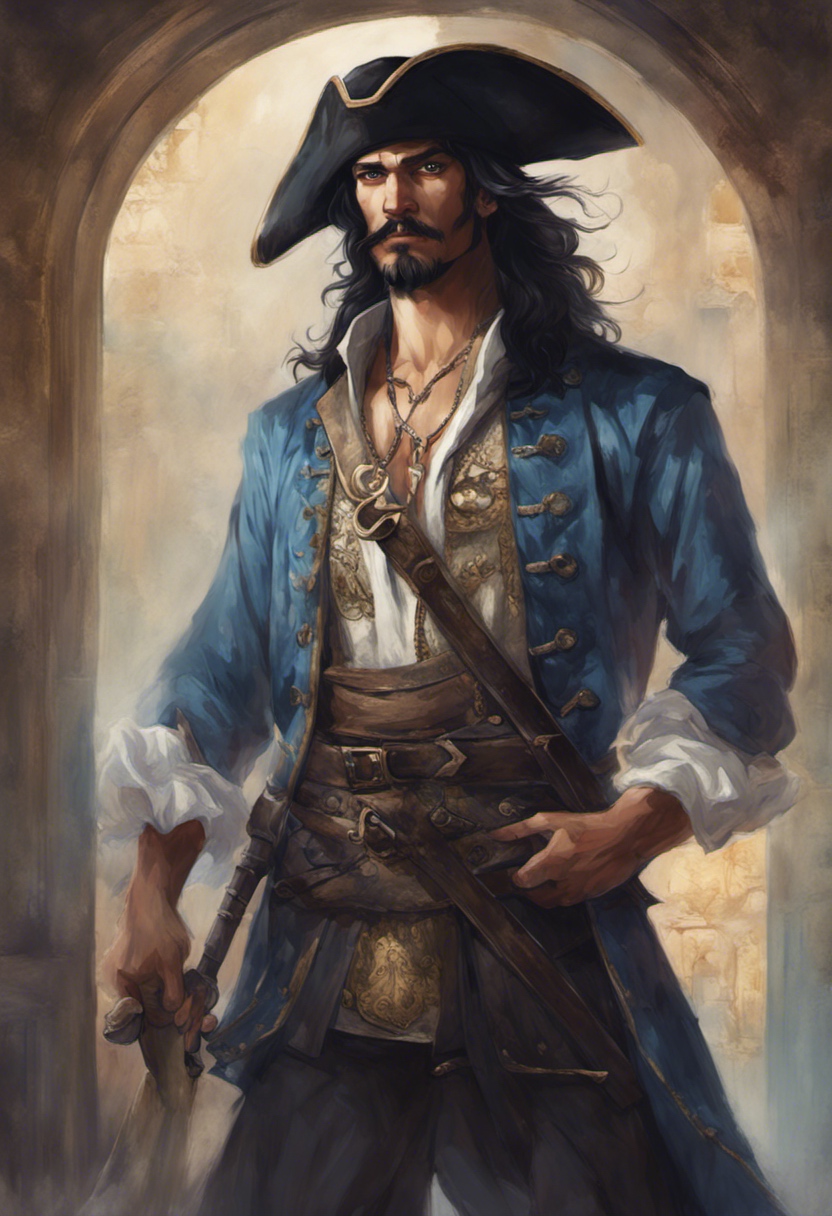
Sir Mordin's Port
There are settlements built on ambition, settlements built on faith, and settlements built on the understanding that somewhere in the world there must be a place where nobody asks questions. Sir Mordin's Port is the third kind.
Clinging to the southern coast of the Second Lands with the tenacity of something that has survived every attempt to dislodge it (including one by the Irna Navy and several by its own inhabitants), Sir Mordin's Port is, by any conventional measure, ungovernable. It has no formal charter, no recognized authority, no allegiance to any crown or continent. What it has is docks, warehouses, an unusually comprehensive market, and a Smaling named Wily Jack who has held the whole magnificent arrangement together through a combination of manipulation, reputation, and the kind of intelligence that makes even dangerous people prefer not to make an enemy of you.
The rules here are few and observed loosely, which is to say they are suggestions backed by consequences:
- No killing inside a place that isn't your own.
- No thieving at the port's warehouse.
- No touching another's ship in dock.
- No collecting bounties in port.
- No taking an unwilling to bed.
And those are, as any regular will confirm, more guidelines than mandates. Most establishments maintain their own security, mostly to protect their own profits, which is the only kind of enforcement Sir Mordin's Port has ever found consistently reliable.
The port divides naturally into three layers: the waterfront third, all docks and dockside buildings, warehouses and storage, a shipyard that will ask no questions about what needs repairing or why; the middle row of inns, entertainment, and taverns where everything from legitimate commerce to things that lack a legitimate description changes hands over drinks; and the back neighborhoods of food businesses, general stores, and the living spaces of those who have decided, for whatever reasons, that Sir Mordin's Port is home.
Everything is for sale here. The more interesting items require finding the right person to ask.
The Swashbuckling Saga of Sir Mordin's Port
Founding: An Ill-Fated Expedition
The founding of Sir Mordin's Port is a story that the Irna Empire would prefer not to be associated with, which is precisely why the association has been preserved so carefully in the oral tradition of the port's inhabitants.
It began with ambition, as most disasters do. The Irna Empire dispatched an expeditionary base camp to the southern edge of the Second Lands; this was, in the chronicles of imperial overreach, a thoroughly underplanned venture, sent with the optimism that accompanies projects whose sponsors do not intend to go themselves. The expedition's appointed governor was a man named Sir Mordin, a Human of apparently genuine vision who arrived to find he had been given a mandate and very nearly nothing else. What construction he managed to complete before events overtook him was, by all accounts, a single building: the governor's mansion, which was at least distinguished by the quality of its stonework.
Sir Mordin envisioned a gateway. The Second Lands would yield their secrets; Irna would benefit; history would judge the expedition favorably.
History had different plans.
From Order to Outlawry
Not long after the expedition established its tentative foothold, three pirate ships came into harbor.
Their captain was an orc female named Blackscar (the first of that name, though far from the last), and she recognized immediately what Sir Mordin had apparently not: an underdefended governor's mansion in a location that every navy in the world was likely to avoid. The settlement fell in a matter of days. Sir Mordin fled for his life, and the port that would bear his name passed, in a single afternoon, from the aspirations of an empire to the possession of people who had more use for it.
Within weeks, the character of the settlement had transformed completely. The Irna expedition's careful framework of colonial administration dissolved in the salt air, replaced by the natural governance of those who operate outside any framework: informal, violent, negotiated daily.
Irna's Failed Reconnaissance
A single ship from Irna came to discover what had happened to their expedition.
It was sunk before it reached the harbor. The message was clear, and Irna, demonstrating a pragmatism that occasionally serves empires better than ambition does, washed its hands of the port entirely. Sir Mordin's name was written into the coastal charts as a hazard and, subsequently, as a landmark, which is its own kind of immortality.
Rise of the Sly Mastermind
The centuries that followed the port's founding were not tranquil. Pirate captains rose and fell through force and treachery. Temporary alliances formed and collapsed. The port was taken, retaken, contested, and abandoned at least twice, and remained throughout this period what it had always been: a place where the rules were whoever was currently biggest.
Then came Wily Jack.
The Smaling's ascent through the port's hierarchy was so gradual and so carefully engineered that those who were displaced by it barely noticed until the displacement was complete. He had arrived as a ship's quartermaster, worked his way to confidant of various captains, and eventually reached the decisive moment: the simultaneous downfall of two rival pirate captains through schemes subtle enough that neither ever identified the architect. The power vacuum that followed was genuine. Wily Jack stepped into it with the air of someone who had been waiting patiently nearby.
The Unwritten Rules
What distinguishes Wily Jack from the pirate captains who preceded him is the understanding that chaos is expensive. Unpredictable violence disrupts commerce; disrupted commerce reduces the tithe flowing into his coffers; therefore, a degree of predictable, enforced order (just enough and no more) is in the interest of everyone who profits from the port functioning.
The guidelines exist not because Wily Jack has a philosophy of justice but because they protect the free flow of coin. Those who follow them are welcome indefinitely. Those who don't find that the port's informal enforcement mechanisms, which do not advertise themselves in advance, are both swift and specific.
The Town Today
The Waterfront
About one-third of the port is devoted to docks and the immediate commerce of ships: berths, warehouses, a shipyard where no one asks how a vessel's hull came to require the kind of repairs it requires, and dockside establishments where the line between drinking establishment and business negotiation is mostly theoretical.
The Backstreets
Behind the waterfront, the inns and taverns accumulate, growing louder and less selective the further from the water you walk. The food stalls and general stores behind those serve the portion of the port's population that has made this place permanent home rather than temporary refuge: a distinction that matters to them, even if it isn't recognized anywhere else.
The Market of Shadows
Virtually anything can be found in Sir Mordin's Port if you know who to ask and are prepared to pay what the asking price eventually becomes. Weapons. Supplies. Information. Services of every description. People, which is the part of this catalogue that no one with a conscience discusses comfortably. Wily Jack ensures that business thrives by maintaining the fragile peace among competing interests, not through justice but through the reliable calculation that the alternative costs more than it's worth.
Sir Mordin's Port is a town perpetually teetering at the edge of its own internal chaos, held together by greed, manipulation, and the collective recognition that someone needs to make sure the docks don't burn down. It is not a place that rewards the naive or the slow. It is, for those who understand its particular grammar, one of the most reliably useful ports in the known world, provided you keep your hand on your coin purse and your back to something solid.
Profile: Wily Jack, The Cunning Mastermind of Sir Mordin's Port
Physical Description
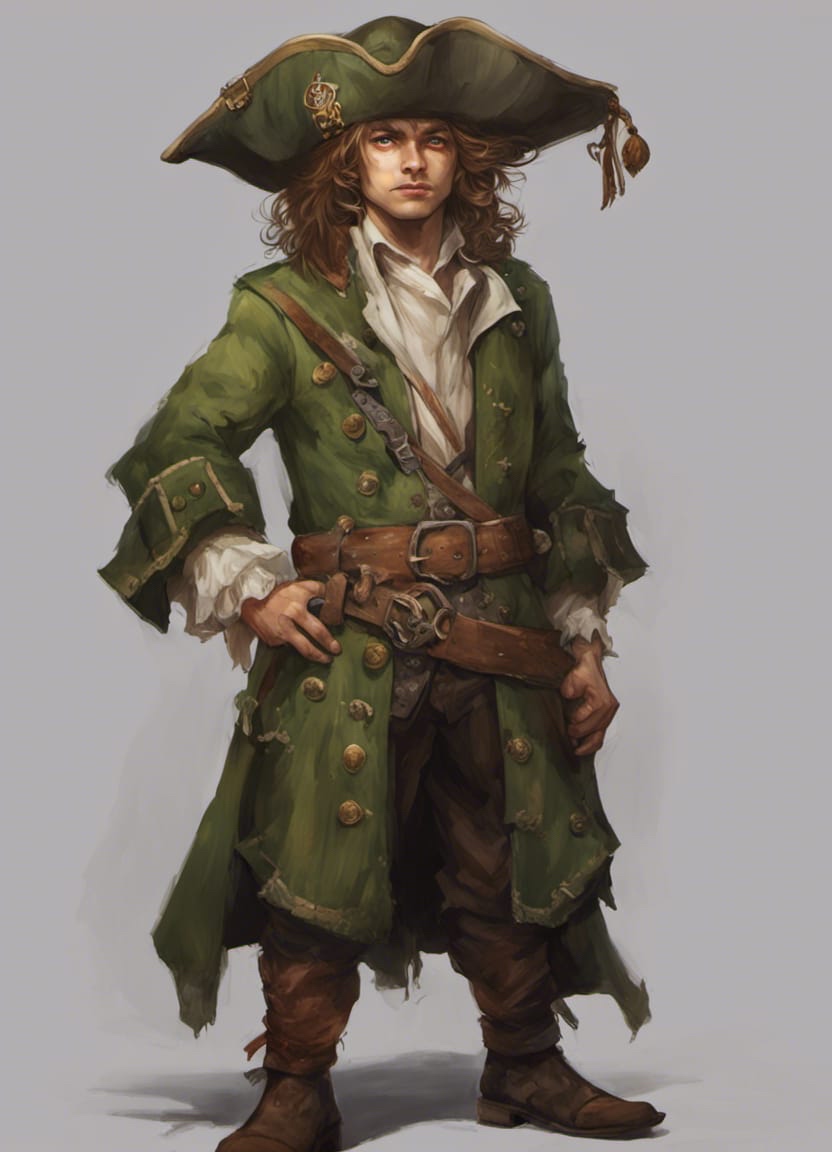
Wily Jack is a Smaling male in his late forties who has the roguish ease of someone who decided a long time ago that the most dangerous thing in any room is the person everyone has already decided is harmless. He stands three feet four inches, which in Sir Mordin's Port is a height that people have learned to stop underestimating. His eyes are a mischievous shade of green, perpetually lit with the expression of a man who is already several moves ahead of the current conversation.
His hair runs to a disheveled sandy mop, usually tucked under a wide-brimmed hat adorned with a feather from an animal no one has been able to identify. His coat is the green of someone who likes green coats: flamboyant, mismatched buttons, each one sourced from a different adventure or acquisition that he has declined to specify. His belt carries an assortment of pouches containing gold, tools, smoke bombs, and (this is purely speculation, but well-founded) several things he would rather not have inspected. His boots are scuffed in the specific way of someone who walks the port's dangerous passages regularly and intends to keep doing so.
Personality
Wily Jack is a manipulator, which is less an insult in Sir Mordin's Port than a job title. His methods are cerebral rather than forceful: he reads people with the effortless precision of someone who has been studying weaknesses professionally for thirty years, and he is excellent company for exactly as long as that serves him, and reliably courteous somewhat longer than that. He keeps his word when he gives it, because in the underworld of Sir Mordin's Port, reputation is the only currency that doesn't devalue.
He has a dark sense of humor and genuine appreciation for the complexity of the port's internal politics: the competing interests, the shifting alliances, the ongoing chess match between captains who mostly don't realize they're playing. He is capable of violence and considers it a last resort, preferring the cleaner results of psychological architecture. He has never, to anyone's certain knowledge, been surprised by anything.
Backstory
He was born in a small Smaling village in Irna, far from the Second Lands and everything that would eventually define him. He left young, worked as a cabin boy, then a mercenary, then a gambler: a sequence of occupations that constitutes, in retrospect, a very thorough education in how people behave when they have something to lose. He found Sir Mordin's Port and recognized in it immediately what it was: potential, buried under the inefficiency of unchecked lawlessness. He proceeded to uncheck it in his own way, which took about fifteen years and left no obvious fingerprints.
Notable Relationships
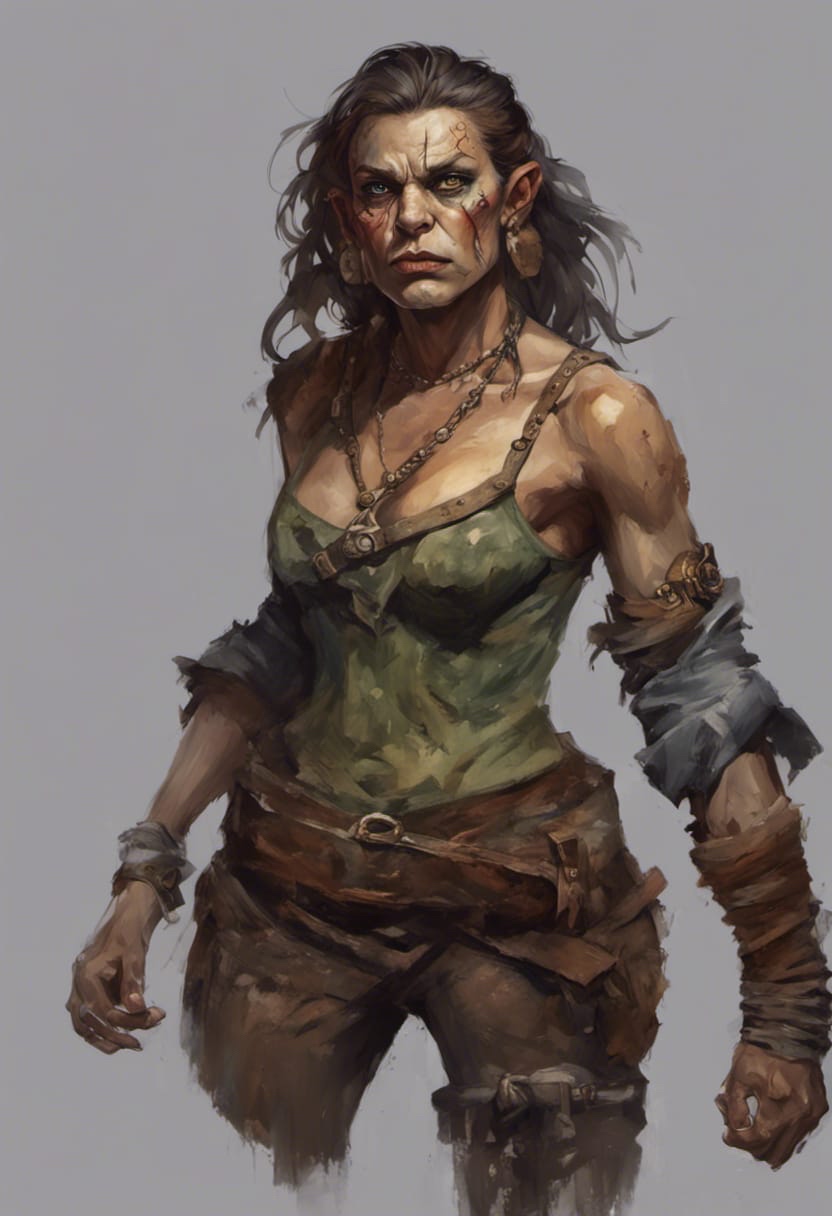
The tenth Captain Blackscar, daughter of the orc line that began the port's pirate history, maintains a working relationship with Wily Jack built on mutual respect and precisely calibrated shared interests. She is one of the few people in Sir Mordin's Port that Wily Jack treats as an equal, which is the closest thing he offers to a compliment.
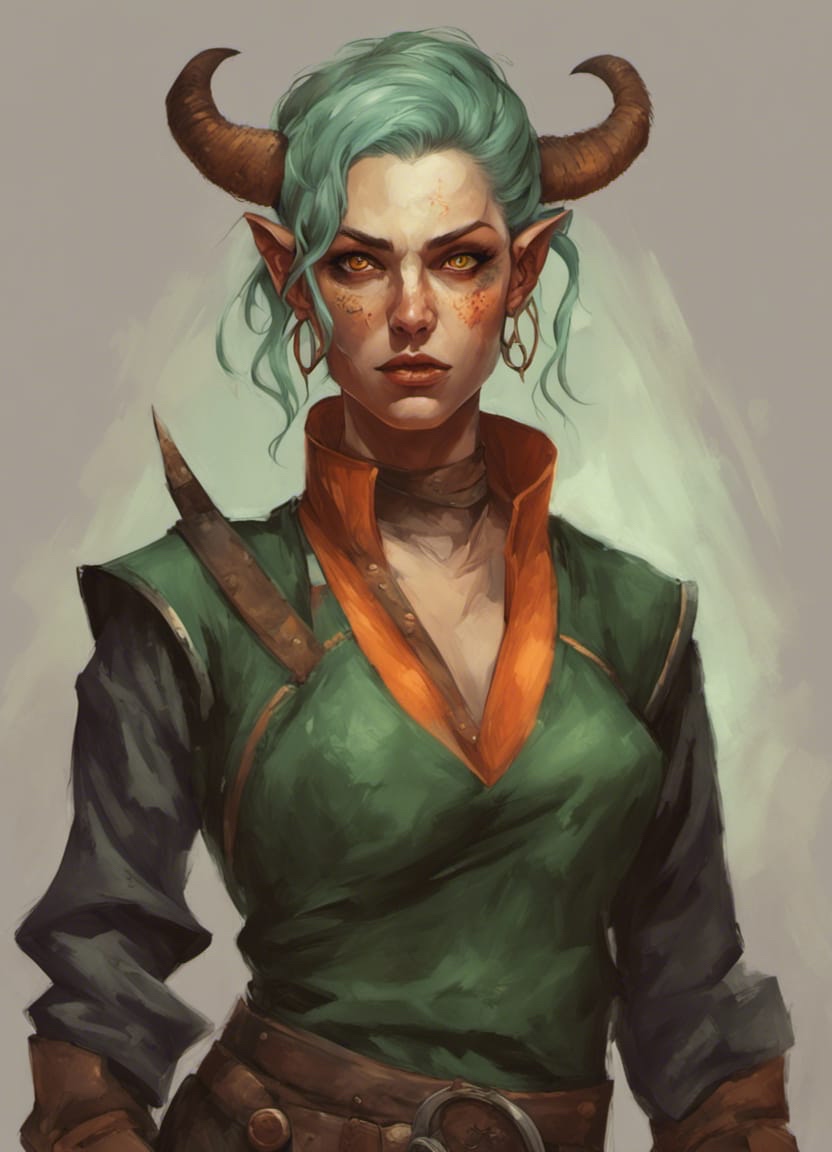
His intelligence network is anchored by Whisper, a zerren female whose skill at gathering information is matched only by her skill at appearing to be doing something else entirely. She operates primarily as a barmaid and occasional street performer; her actual role is known to very few and suspected by most. She is, by all evidence, the best-informed person in Sir Mordin's Port, which makes her, in practical terms, the second most dangerous.
Wily Jack is a paradox that the port has chosen not to resolve: feared and admired, deceitful and, within his own framework, entirely reliable. As long as the ships dock and the coin flows, he is content to manage the strings from a slight remove, letting the port's chaos exhaust itself harmlessly around the structure he has built to contain it.
He is very good at his work. The port is, by his predecessors' standards, almost peaceful.
Almost.